
 Related
Critical Care Nurse Dating
Connect with ICU nurses whose emotional strength and precision under pressure make them deeply grounded, committed partners.
Explore →
PulseConnect connects accomplished men with verified single ER nurses - women who navigate chaos with calm, think on their feet in life-or-death moments, and bring remarkable energy and adaptability to their relationships. If you're looking for a partner whose vitality and resilience match her compassion, you're in the right place.
ER nurses bring a rare combination of quick thinking and warmth to relationships. Here's what sets them apart:
Emergency nurses work at the frontline of healthcare, where every shift is unpredictable and every patient arrival could be anything from a minor laceration to a multi-system trauma. The emergency department operates around the clock, and ER nurses are the constant - triaging patients, managing rapid assessments, administering critical interventions, and coordinating with physicians across dozens of cases simultaneously. Dating an ER nurse means partnering with a woman who has trained herself to find calm in chaos and clarity in confusion.
According to the Emergency Nurses Association, over 200,000 registered nurses work in emergency departments across the United States. These nurses typically handle patient loads that can surge from a manageable flow to overwhelming volume within minutes. A 2025 study published in the Journal of Emergency Nursing found that ER nurses make an average of 120 rapid clinical decisions per shift, frequently under time pressure with incomplete information. This cognitive intensity builds a mental agility and confidence that carries directly into how they approach life and relationships outside the hospital walls.
Every emergency nurse has stories - the time she recognized a stroke symptom that others missed, the pediatric code where her team saved a child, the mass casualty event where she triaged 30 patients in 20 minutes. These experiences don't just build clinical expertise; they create a woman who values decisiveness, directness, and authenticity. She has no patience for games because she has seen what happens when seconds matter. When you date an ER nurse, you're with someone who knows what she wants and won't waste time pretending otherwise.
The fast-paced nature of ER work also means your partner will have developed an impressive ability to compartmentalize. She can transition from managing a critical patient to sharing a laugh with a colleague in the break room within minutes - not because she's callous, but because she has learned that emotional sustainability in emergency medicine requires processing feelings in their own time. Understanding this rhythm is essential. Some evenings she'll come home buzzing with adrenaline and want to do something active; other nights she'll be emotionally spent and need quiet comfort. PulseConnect's platform includes conversation guides and relationship resources designed to help you navigate these unique dynamics with confidence.
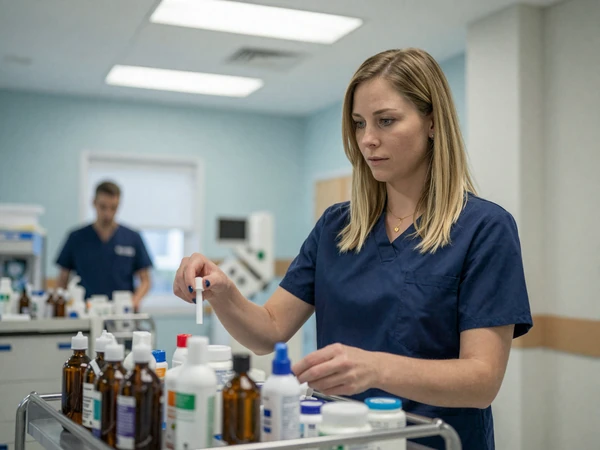
Emergency departments never close, which means ER nurses work a rotating schedule that includes nights, weekends, and holidays. Most emergency nurses work three 12-hour shifts per week, but those shifts rarely fall on the same days each week. One week might be Sunday-Tuesday-Wednesday; the next could be Thursday-Friday-Saturday with two night shifts mixed in. This is not a lifestyle that fits neatly into a Monday-through-Friday relationship rhythm - and that's exactly why understanding shift work is the foundation of dating an ER nurse successfully.
Here's the thing: the block schedule can actually be an advantage. Three 12-hour shifts mean four full days off, which creates concentrated pockets of quality time that many traditional couples never experience. The key is planning. ER nurses are master schedulers by necessity - they manage patient flow, medication timing, and shift handoffs with precision. When you bring that same intentionality to your relationship calendar, you can build a deeper connection in fewer, more focused hours. PulseConnect's schedule-aware matching algorithm helps you find single nurses whose shift rotations actually complement your availability, rather than creating constant scheduling friction.
It's also worth understanding the physical reality of shift work. Night shifts disrupt circadian rhythms, and the transition between day and night shifts - sometimes within the same week - takes a real toll. A 2025 study in the Journal of Clinical Nursing found that rotating shift nurses need an average of 48 hours to fully recover their sleep patterns after a block of night shifts. Being patient with your partner's need for recovery sleep, rather than interpreting it as disinterest, is one of the most meaningful ways you can show support.
Emergency nursing is one of the most stressful roles in healthcare. ER nurses routinely encounter trauma, violence, loss, and emotional intensity that most people will never face. A 2025 survey by the Emergency Nurses Association found that 48% of ER nurses reported symptoms of burnout, and 27% experienced symptoms consistent with secondary traumatic stress. These numbers aren't a warning sign - they're a reality check. The woman you're interested in carries more weight than she shows, and understanding how to support her through it is the difference between a relationship that thrives and one that fractures.
The best partners of ER nurses don't try to fix what we've seen - they create a space where we can leave it at the door and remember who we are outside of the chaos.
- Emergency Nurses Association Wellness Report, 2025
The most effective stress management strategy in a relationship with an ER nurse is creating clear transitions between work and home. When she walks through the door after a shift, she may still be running on adrenaline or processing a difficult case. Rather than immediately launching into questions or plans, give her space to decompress. Some nurses use a specific ritual - changing clothes immediately, taking a shower, or sitting quietly for ten minutes - as a psychological boundary between the emergency department and home life. Respecting that ritual, and even helping facilitate it, communicates more care than any words could.
It's equally important to recognize when your partner needs to talk versus when she needs distraction. ER nurses develop sophisticated self-awareness about their emotional states, but they may not always volunteer what they need. A simple question - "Do you want to talk about your shift, or would you rather think about something else?" - gives her agency without pressure. Over time, you'll learn her patterns: the shifts that leave her quiet and reflective, the ones that leave her energized and wanting to go out, and the rare ones that leave her needing to be held without a single word spoken.
Encouraging her professional support systems matters too. Many ER nurses benefit from peer debriefing programs, therapy, or structured resilience training. A 2025 study in the Journal of Emergency Nursing found that ER nurses with access to regular peer support sessions reported 39% lower burnout rates. When you support her in maintaining these resources - whether that means covering household responsibilities on her debriefing day or simply acknowledging the importance of her self-care - you're investing directly in the health of your relationship.
If you're drawn to the energy and resilience of emergency nurses, you may also connect with women in other fast-paced, high-stakes healthcare roles.
Related
Connect with ICU nurses whose emotional strength and precision under pressure make them deeply grounded, committed partners.
Explore → Related
Meet paramedics who thrive in pre-hospital emergencies, bringing courage, quick reflexes, and unwavering commitment to their relationships.
Explore →
Explore dating opportunities with registered nurses across all specialties - women whose compassion and dedication shine in every relationship.
Explore →PulseConnect is the most popular dating platform among registered nurses, particularly emergency nurses, because it is purpose-built for the medical community. Unlike generic dating apps that fail to account for shift work and healthcare lifestyles, PulseConnect offers schedule-aware matching, verified profiles, and conversation resources designed specifically for relationships with medical professionals. A 2025 survey of healthcare workers found that 68% of nurses prefer niche dating platforms over mainstream apps when seeking serious relationships, citing better compatibility and fewer scheduling conflicts.
Dating an ER nurse is an exhilarating experience filled with energy, spontaneity, and deep connection. Your partner will work rotating 12-hour shifts that include nights and weekends, which means your shared time is intentional and valued. ER nurses tend to be direct communicators, quick decision-makers, and people who live fully in the present moment - traits forged by the unpredictability of emergency medicine. You can expect a relationship with a woman who is passionate, resilient, and appreciative of quality time over quantity.
The most effective way to meet single emergency nurses is through PulseConnect, a dedicated medical professional dating platform where verified ER nurses are actively seeking serious relationships. Unlike bars or social events where nurses may be off-duty and not looking to date, PulseConnect connects you with women who have already indicated they want a committed partner. Our schedule-aware matching ensures you connect with ER nurses whose shift rotations align with your availability.
Yes, ER nurses absolutely have time for relationships - but their time operates on a different rhythm than a standard work week. Most emergency nurses work three 12-hour shifts, giving them four consecutive days off. This block schedule can actually create more focused quality time than a traditional schedule, provided both partners plan intentionally. PulseConnect's schedule-aware matching helps you find ER nurses whose off-days complement your own availability.
The key is creating clear boundaries between work and home. Give your partner space to decompress after a shift - a ritual like changing clothes, showering, or sitting quietly for ten minutes can serve as a psychological transition. Ask whether she wants to talk about her shift or needs distraction rather than assuming either. Encourage her self-care practices and professional support systems, such as peer debriefing programs. A 2025 study found that ER nurses with strong partner support reported 39% lower burnout rates.
Yes. Every member on PulseConnect completes identity verification during registration using government ID checks. For healthcare professional members, we also offer optional credential verification. This ensures that the person you are talking to is exactly who they claim to be - no fake profiles, no bots, and no misrepresentation of professional background. Your safety and trust are our top priorities.
Practical strategies for navigating shift work, on-call nights, and the unique time demands of a healthcare career.
Understand the common obstacles in medical relationships and learn proven strategies to build a lasting connection.
Discover why so many medical professionals seek partners within the healthcare community - and what that means for you.